

Road to Third Pole
China
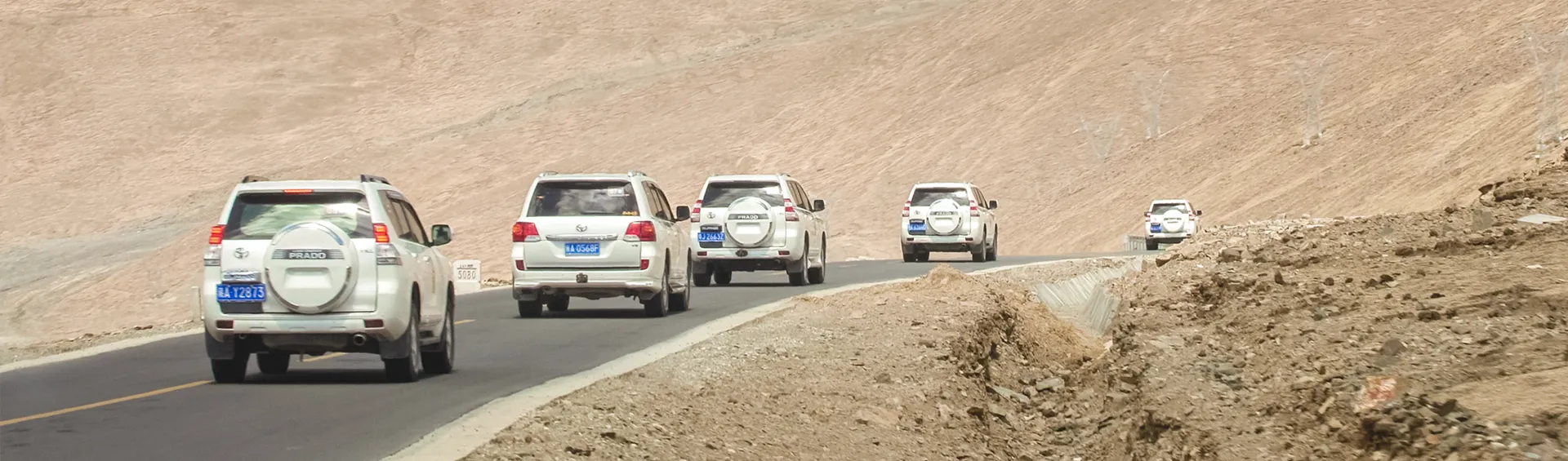
Nomadic Road's May 2018 Road to Third Pole expedition took a group of overlanders 1,500 kilometres across the Tibetan Plateau over eight days, with most of the route on tarmac. The Tibetan Plateau is sometimes called the Third Pole because of the volume of fresh water locked in its glaciers, and the route worked across some of the highest sustained driving terrain on the planet. Several days kept the convoy above 4,000 metres, with the highest stages pushing close to 5,000. May sits at the start of the Tibetan dry season, with stable weather and the kind of clear, hard light that makes the high plateau unmistakable. The route passed glacial lakes that glow turquoise from suspended mineral dust, snow-capped peaks visible from a hundred kilometres away, and the high-altitude grasslands where yak herds graze alongside the road. Cultural stops included monasteries, prayer flag passes and small Tibetan villages where the architecture, food and rhythm of daily life have changed very little in centuries. Driving at altitude is its own challenge. The convoy moved at controlled speeds, with extended acclimatisation time built into the schedule. Several participants felt the altitude in headaches, fatigue and shallow sleep, all of which are the standard experience above 4,000 metres. Evenings were spent in small Tibetan-style lodges, with butter tea, momos and the slow, layered conversations that long driving days produce. The May 2018 Road to Third Pole expedition delivered one of the most singular high-altitude overland routes Nomadic Road runs. Visually intense, culturally rich and physically demanding, it remains a benchmark in the catalogue.