Inside the Trans Gobi Expedition Through the Eyes of Those Who Lived It
Could spending a few nights in a hotel be the most challenging part of an overland expedition? For two fellow nomads, it might just be. They were two of the ten participants on Nomadic Road’s recent Trans Gobi expedition in Mongolia. Speaking of other tough moments, one of them laughed and said, “[Driving on] the tarmac, maybe.”
Sarcastic? Probably. But not entirely untrue.
Individuals who sign up for Nomadic Road’s expeditions aren’t looking for comfort. In fact, they seek the complete opposite: the unknown, the rugged, the parts of travel most people avoid. They enjoy wading through salt-fine sand, knowing the car might get bogged. They embrace the unpredictability of weather, the vastness of nowhere, the mental and physical push that overlanding demands. These aren’t vacations, and the participants don’t want them to be.
So how did this 4x4 adventure across the Gobi pan out for the fellow nomads and the rest of the crew? Was it challenging enough? What were their best moments? And what did they take back home with them? Here’s their story, straight from the people who lived the Gobi desert adventure.
What Makes Mongolia a Magnet for Explorers
Ask anyone on the Trans Gobi expedition why they came to Mongolia, and the answers sound different at first, but they all point in the same direction: a hunger for something real.
“We don’t want to stay in a five-star hotel,” says an expedition member, from Italy, who travelled with his sister. “We like to travel in nature and see unbelievable landscapes like in Mongolia.”
A fellow explorer nods to that sense of distance. “Mongolia’s very far from Italy, and it’s not a touristy country. It’s perfect for us,” she says. She hadn’t travelled much in this part of the world before. “So when my friends asked me, ‘Do you want to come to Mongolia?’ I said yes immediately.”
Others came for entirely unique reasons, but the feeling beneath it was similar.
“We just really enjoy being outdoors,” says a fellow adventurer. “Being in locations that are wild, untouched. Driving ourselves is a big part of being on one of these expeditions.”
For a fellow nomad, a 4x4 adventure across the Gobi was the promise of pure adrenaline. “I love adventure tours and adventure sports,” he says. “And when I got to know more about what this trip was about, I thought it was very exciting.”
Whether it’s the pull of wide-open spaces, the thrill of driving through raw terrain, or simply the instinct to go somewhere unpolished and unfiltered, Mongolia speaks to a certain kind of traveller: the kind who is not looking to escape life, but to feel more of it.
Mongolia Is Its Own Kind of Package
When an expedition member tried to sum up his experience of the Gobi, he didn’t reach for big words. He simply said, “It’s a package.” Not one thing, but many. “There are the landscapes, driving in the sand, the fast off-roading, meeting the nomads… a lot of different things.”
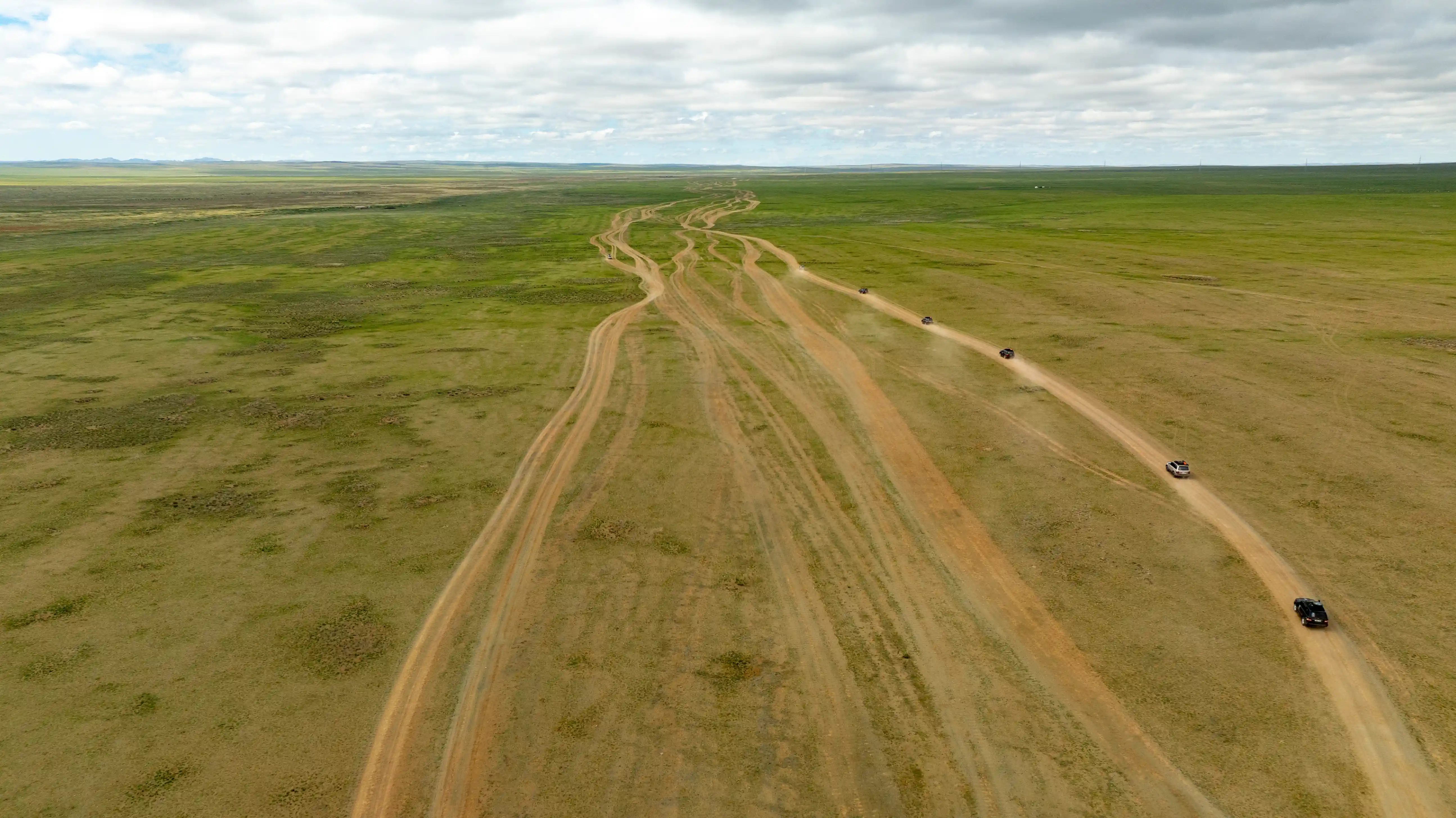
And that’s really what the Trans Gobi expedition feels like. More than just a desert, it’s a shifting mix of extremes strung together across about 2,400 kilometres. One day begins in Ulaanbaatar’s crisp, blue light; another unfolds among ancient granite formations in Ikh Gazriin Chuluu. The road leads further south to the Flaming Cliffs, a place that looks like it’s still cooling from a fire, before drifting into the emptiness of Nemegt Uul and the quieter rhythms of Shinejinst.
Throughout the 12-day Gobi desert adventure, the terrain keeps changing under the tyres. Hard-packed earth turns to gravel, gravel to sand, and then suddenly to vast dunes that feel almost unreal. Khongoriin Els and Mongol Els rise like walls of wind, towering 275 metres high, the kind of dunes that look impossible from afar and even more impossible once you’re actually driving on them.
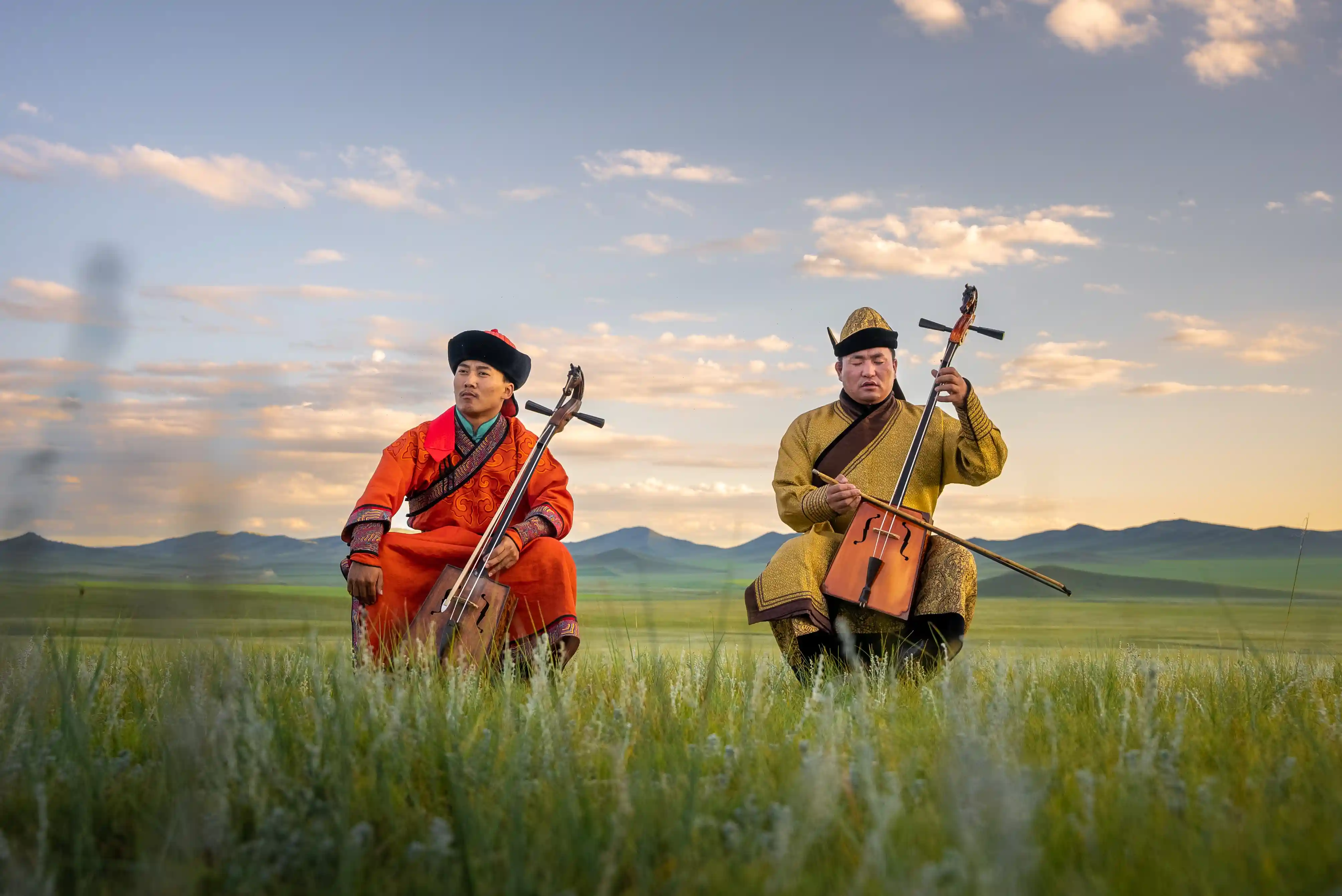
And just when the desert feels endless, the expedition arrives somewhere that breaks the pattern entirely. “The nicest and most unexpected experience has been today, next to the lake,” says the same fellow nomad, recalling Durgun Lake, blue water cradled by dunes at the base of a mountain. “I haven’t seen something as pretty and serene as this before.”
Realising a Long-Held Dream in Mongolia
For many travellers, overlanding in Mongolia sits somewhere between a lifelong dream and an impossible undertaking. The same expedition member had imagined this kind of driving for years. “Probably without any doubts, the driving,” he says when asked what challenged him most. “I always dreamed about it… and here, I could finally realise this dream.”
Self-overlanding in Mongolia is brutally complex. Distances between fuel stations can stretch for hours, weather flips without warning, and vehicles need constant attention. Even choosing the right track across an open plain requires experience and instinct. It’s not a place where you simply “go for a long drive.”
People choose Nomadic Road not to shrug off these difficulties, but to make them more survivable, meaningful, and safe. The same fellow adventurer was surprised by how much of the invisible weight had been lifted off participants. “The fact that Nomadic Road just took care of everything for us was the best part,” she says. “We weren’t expecting to have such nice gear and food. We didn’t need to worry about anything… it was all taken care of.”
Fuel scarcity was another shadow hanging over this edition: Mongolia buys fuel from Russia, and the expedition happened to fall in the most difficult months of the year. In small towns, you might spot five or six stations, but only a few would have anything to pump. Yet somehow, every tank in the convoy stayed full for the course of the Gobi desert adventure.
The same fellow nomad sums up the practical reality: “We wanted to do [this expedition] in a convoy because you can’t drive in Mongolia on your own. You definitely need professionals to join you.”
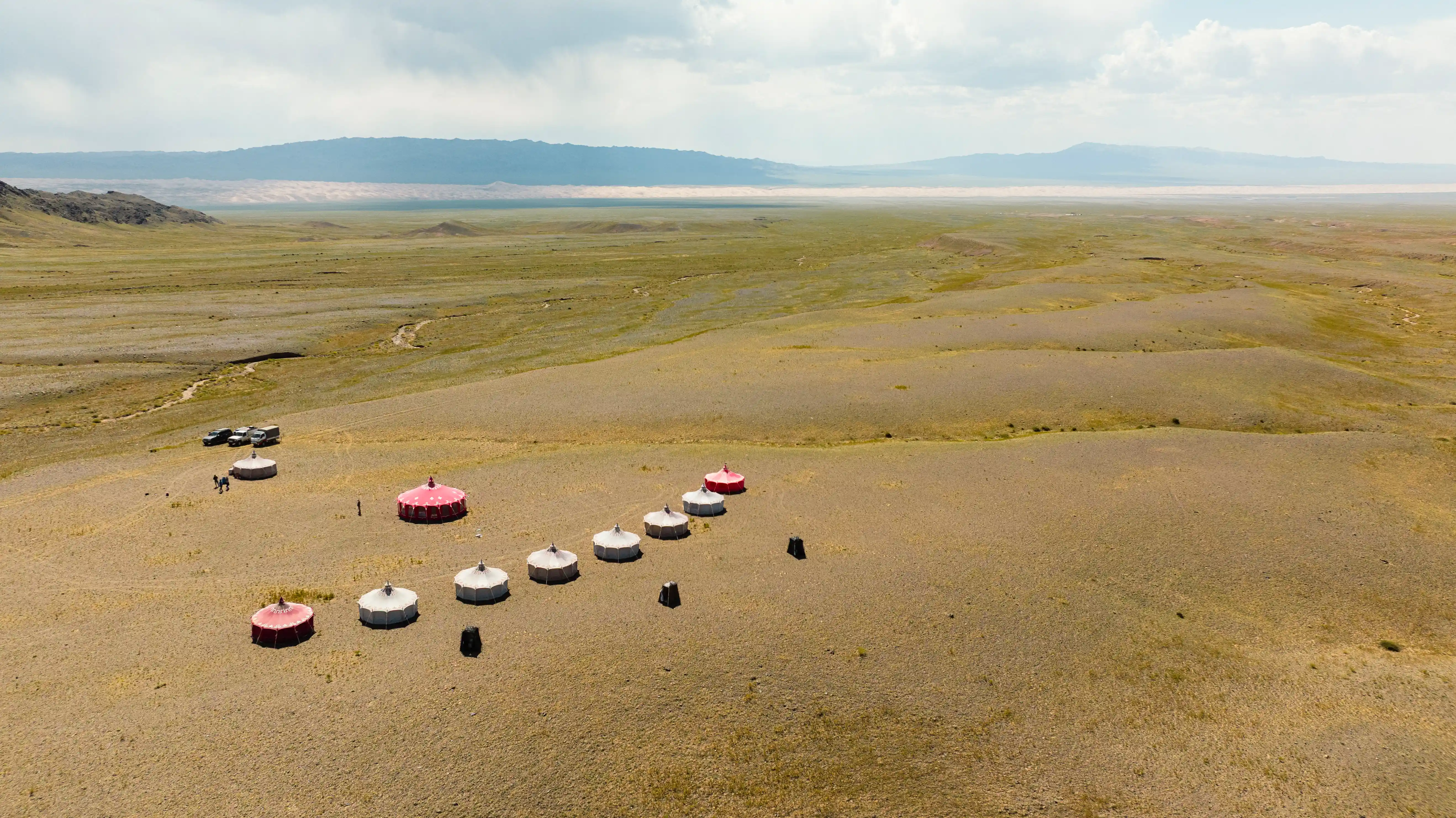
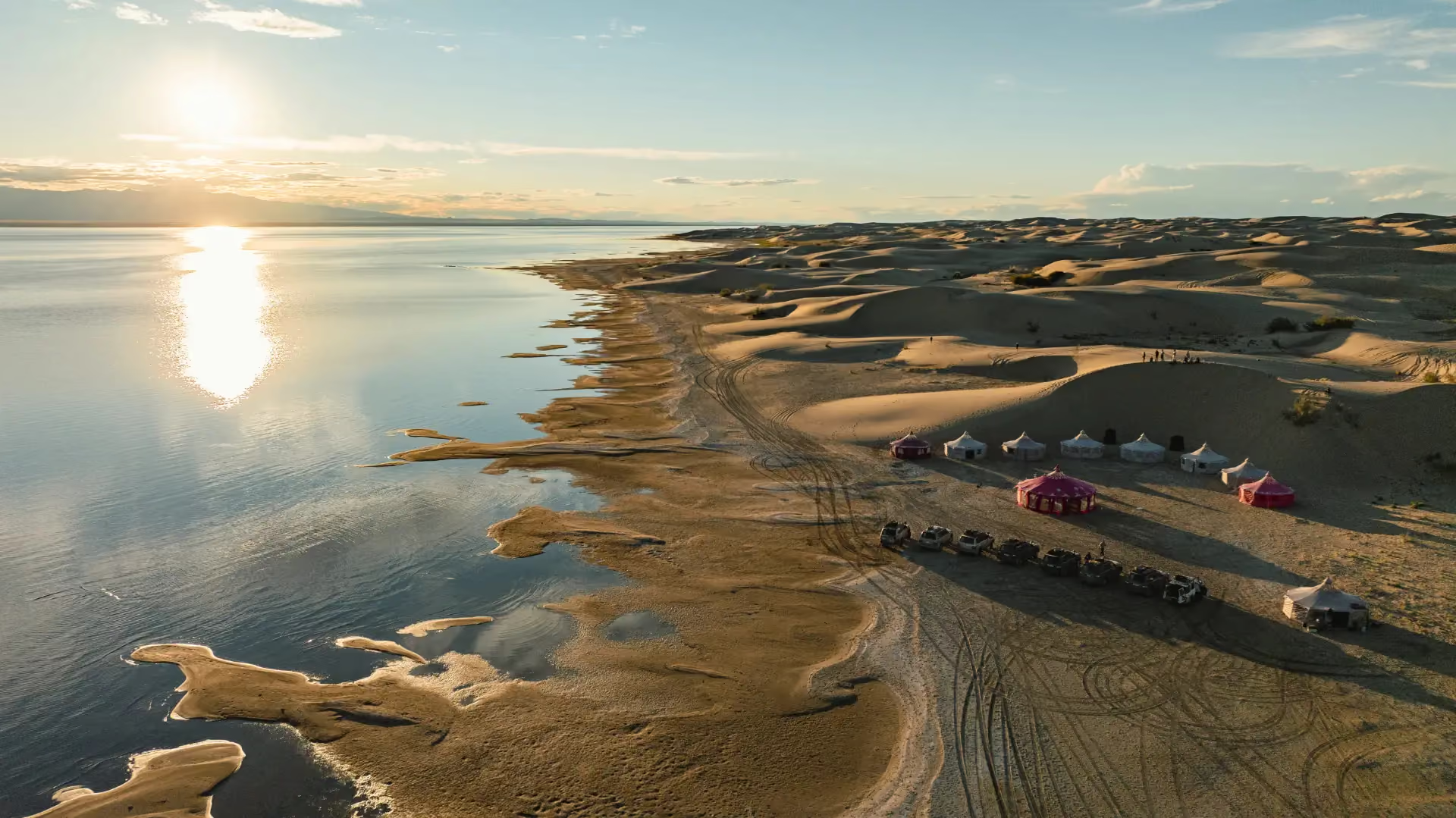
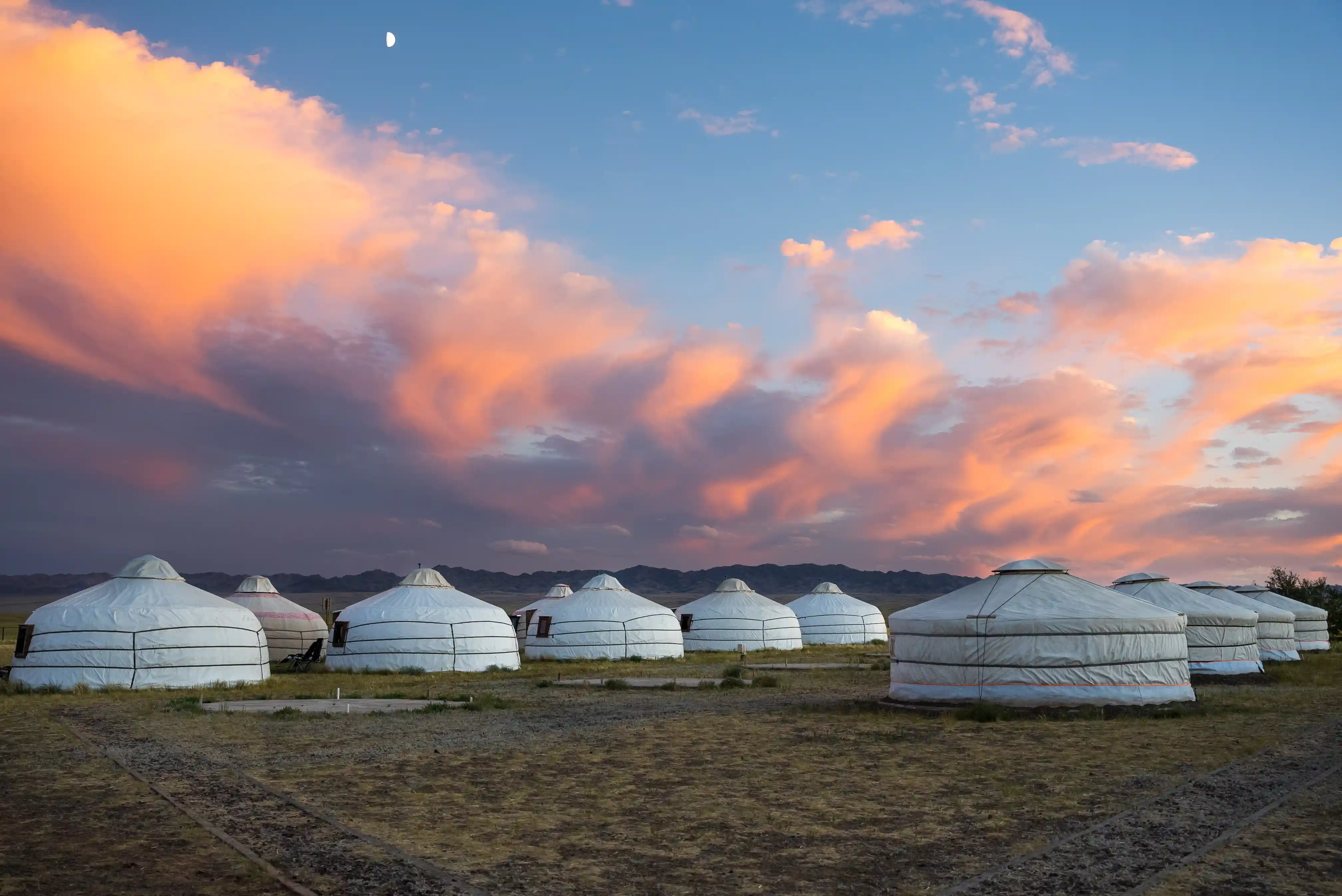
The Thoughts That Find You Out ThereAerial view of Nomadic Road’s remote glamping camp in the Mongolian wilderness, featuring traditional yurts surrounded by endless steppe landscapes. Set far from civilization, the camp offers an immersive overland experience in one of the world’s last truly wild frontiers.
Revelations and quiet takeaways aren’t uncommon on an expedition like this. Days spent in raw landscapes, far from routine, have a way of stripping things down and making space for thoughts that don’t usually surface at home.
The same fellow adventurer, who celebrated a landmark birthday on the expedition, found herself unexpectedly reflective. “I had a lot of contemplative moments about my past and my future,” she says.
For the same fellow explorer, the journey peeled back layers she didn't know she’d misplaced. “I reconnected with myself,” she says. “When you live in a city and work all the time, you usually don’t have a connection with yourself.”
Others were quietly tender. When asked what she learned, the fellow nomad turned to her partner and simply said, “That I trust you.”
Another fellow nomad’s realisation came from watching people navigate challenges together. “It’s very important to look at things through someone else’s prism,” he says. “What you think is right may not be right for someone else. You must see it from their viewpoint.”
And just like that, another Trans Gobi convoy returned with its own set of stories. Experience the expedition through their eyes, check out the Unscripted Stories Mongolia: Trans Gobi film on our YouTube channel.
And if Mongolia is calling, Nomadic Road currently runs three distinct overlanding routes across the country. In addition, there are new expeditions on the horizon for 2026, from India to the Middle East and beyond.
RELATED STORIES
What Will Travel Look Like in 2026? Predictions From the Road
Why More Women Are Choosing Adventure Travel And Why It’s Here to Stay