Mongolia Is for Everyone, Here’s Proof from Our Nomadic Summer Expedition
On our recent Nomadic Summer Mongolia expedition, families, honeymooners, and solo travellers alike discovered quiet moments, revelations, and the kind of experiences that stay with you long after the road ends, all captured in a film by Nomadic Road filmmaker Thomas.
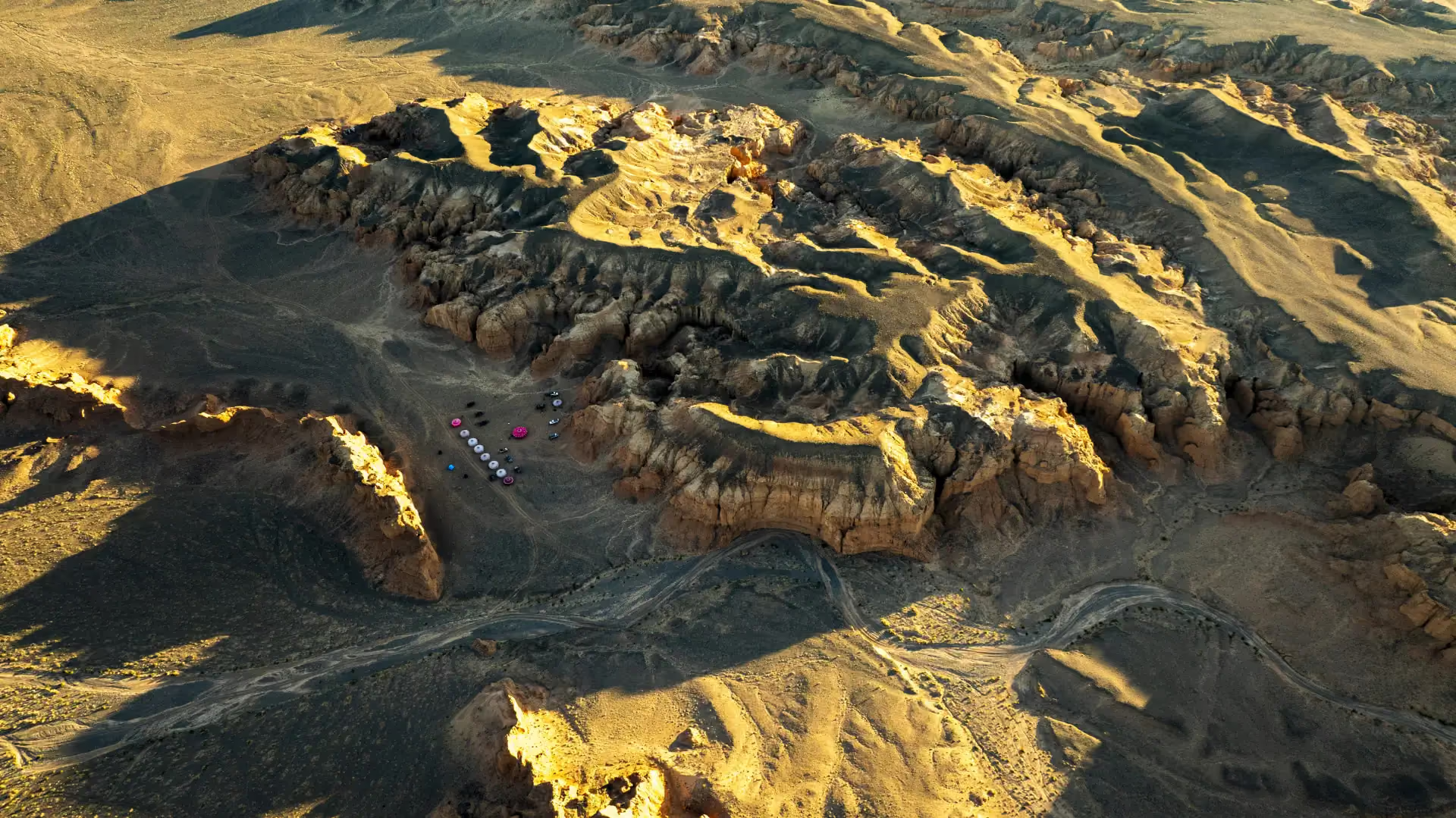
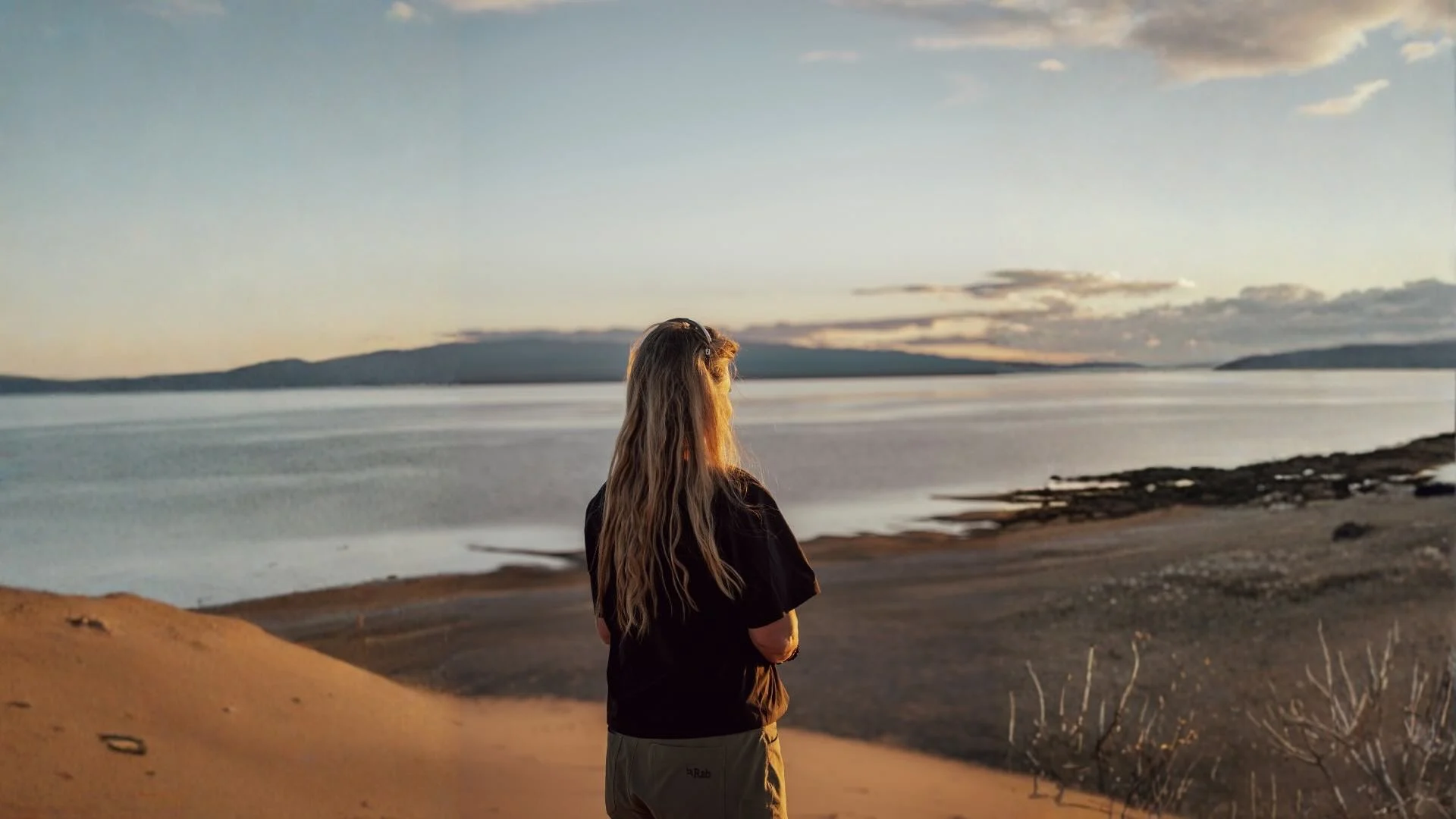
By the time the convoy reached camp, the light had turned to amber. Engines quieted, and one by one, people stepped out into the stillness. No one said much. Some unfolded their camping chairs and drifted toward the cliffs. The honeymooners wandered off for a walk. A father took his children down the same road they had driven in on, chasing a view that had moved him earlier in the day. “There was nobody else, and each one found their own way to engage themselves,” says Venky.
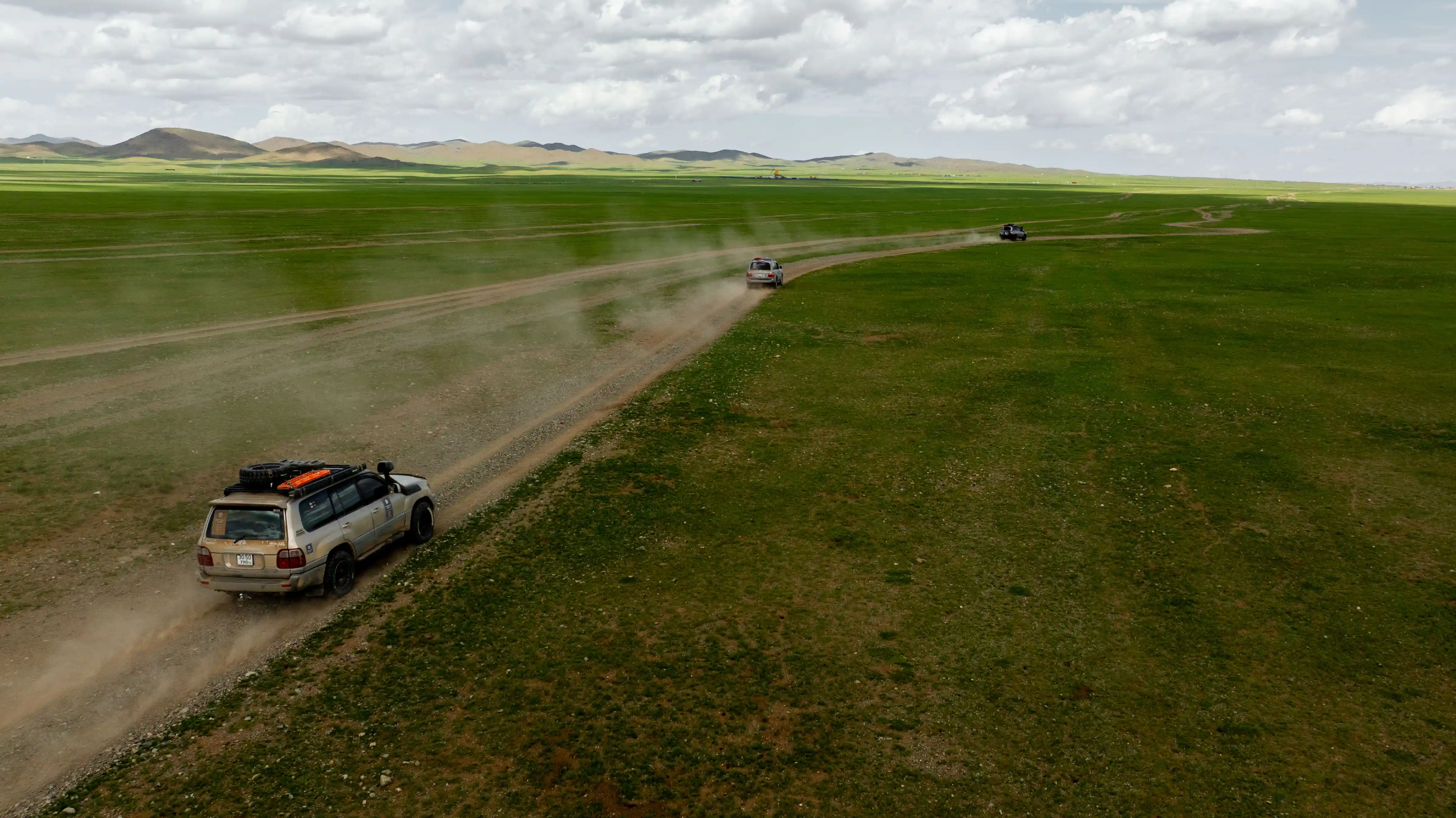
This was day five of the Nomadic Summer Mongolia expedition, a journey that carried a group of travellers from across the world through the vast heart of the country, creating unforgettable Mongolia travel stories along the way. Each participant took away something different from the road, fragments of which were brought together in Unscripted Stories, a film created by Thomas, one of Nomadic Road’s filmmakers.
Freedom in a Borderless Land
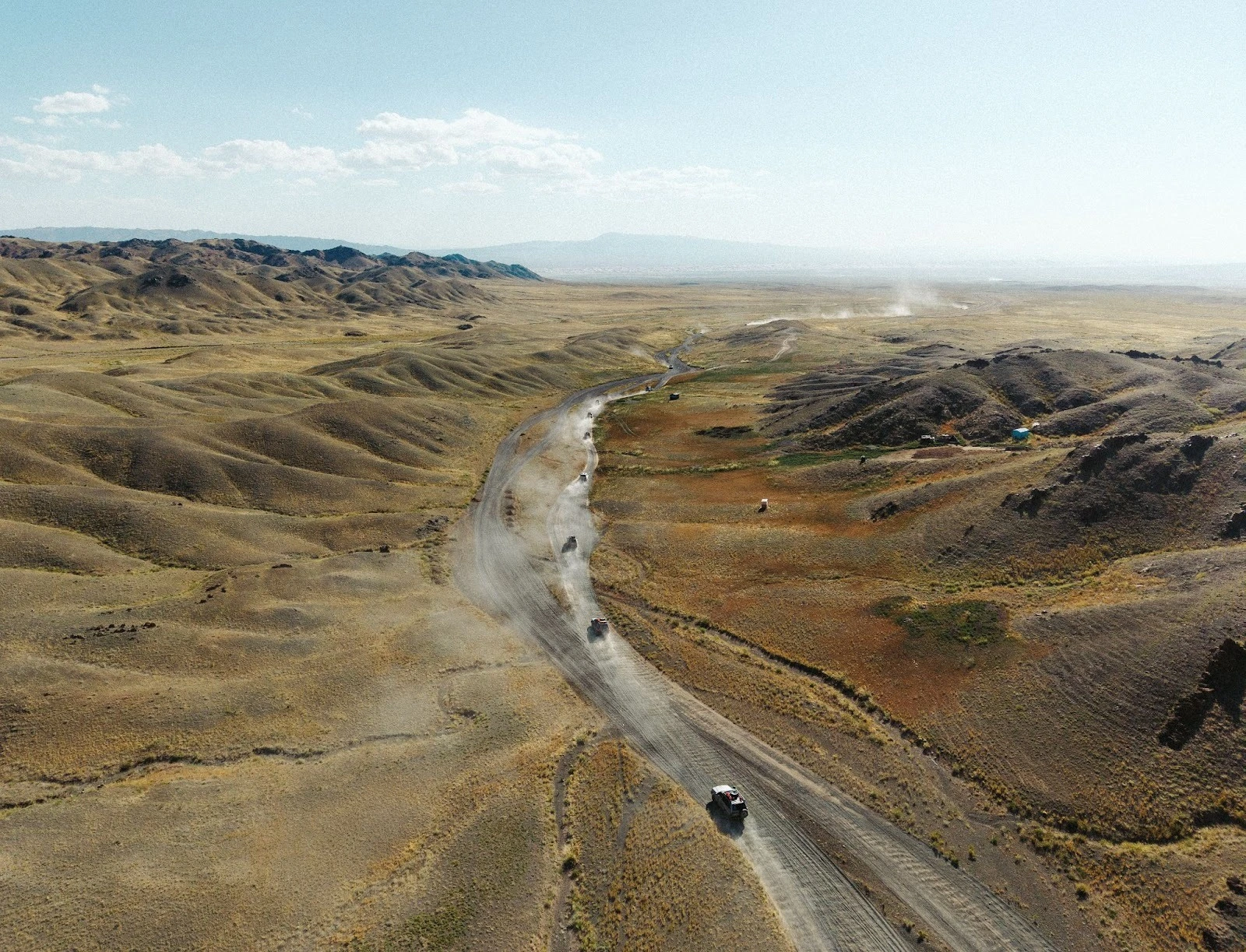
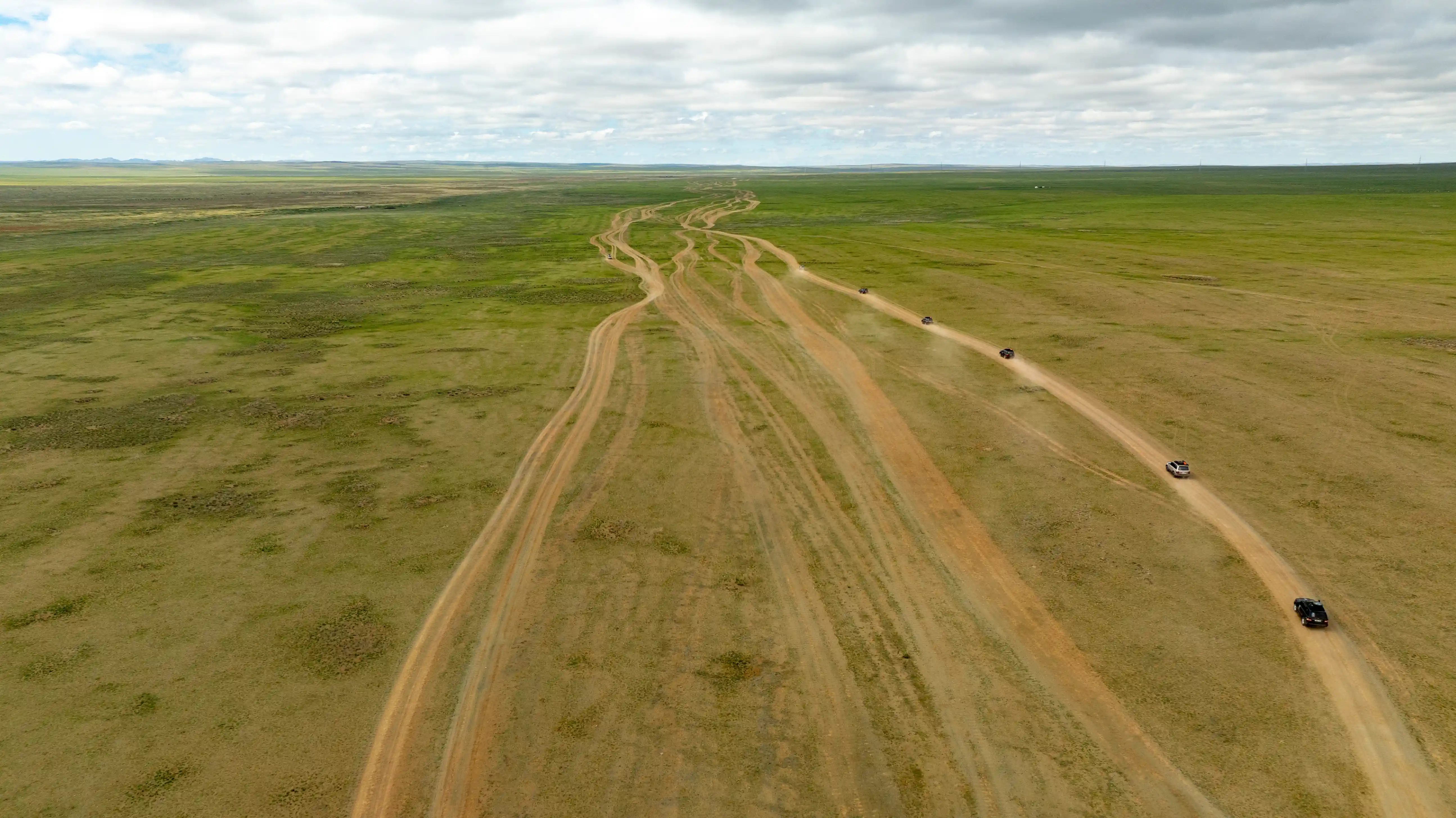
“I think what you have when you travel through Mongolia is this sense of freedom,” says a fellow participant, from the Netherlands. “There are no fences, no borders; you can just take a right if you want to. You can drive into the fields or the mountains; there are no signs, which is incredible.” Coming from cities where life is framed by order and boundaries, the raw openness of Mongolia feels almost disorienting at first, a reminder of how much of modern life is spent within lines we didn’t draw.

Along the way, the expedition offers small but vivid lessons in nomadic culture and traditions. Nights spent in gers (portable tents that can be dismantled and moved within hours), and encounters with locals, from archery practice to wrestling matches, or the haunting melodies of throat singing along the Orkhon River, bring travellers closer to the living culture of the land.gers (portable tents that can be dismantled and moved within hours), and encounters with locals, from archery practice to wrestling matches, or the haunting melodies of throat singing along the Orkhon River, bring travellers closer to the living culture of the land.
As the convoy moves through the country, the landscapes change constantly (and dramatically). “You know, you go from the sands that are really beige to butter yellow, to orange, to red,” says a fellow traveller, the participant’s partner. “There’s no tourism, no pollution; it’s real culture.”
As the landscapes kept changing, so did the travellers themselves.
Learning Each Other on the Road
Among the convoy was a couple from Italy who had recently married. For one expedition member and his wife, overlanding in Mongolia was a way to begin something new.
“We watched a few of Nomadic Road’s earlier documentaries,” the same expedition member says. “We thought, is it really worth doing a typical honeymoon in a five-star resort, or should we visit this beautiful country, meet amazing people, and learn from how they live? We both love driving, so this felt like the perfect choice.”

They could have chosen a resort, somewhere predictable and polished, but instead they came here. Each day, they took turns behind the wheel, navigating Mongolia’s breathtaking landscapes. “The challenge,” the same expedition member says, “is that if you understand how the cars work, you realise they’ll take you anywhere. They’re indestructible. But to make the ride more comfortable, you need to watch every little rock. It’s mentally engaging to stay focused for hours, but also deeply satisfying.”
Out here on the open road, shared adventure becomes a different kind of intimacy. When you’re driving across endless plains with no distractions and nowhere to hide, you see each other as you are.
Finding Confidence in Motion
A fellow explorer, a solo traveller from Ireland, had come to Mongolia for one simple reason: she wanted to drive. “It was something completely different; I couldn’t find anything else where you could drive yourself around in a place like Mongolia. That’s what motivated me to come. It wasn’t like your regular holiday.”

Still, the driving itself was the most challenging part for her. “I’d never been off-road,” she said, “but by the second day, I got used to the size of the car, and everyone in the convoy got going.” By the end of the expedition, she realised something. “I learnt that I can do some hard things, like driving off-road and a car that’s much bigger than me.”
Rediscovering Joy in the Everyday
For a fellow adventurer and a fellow nomad, overlanding in Mongolia was about something larger than the miles covered. The couple had already travelled to Zambia with Nomadic Road back in 2021, but this time was different. They brought their son along, a first for the family.
“This expedition was a little special for us,” the same adventurer says. “It was the first time we stepped out of our comfort zone as a family. Away from work, away from our son’s studies… just being together for days, doing things side by side. That’s what made it truly special.”
For the family of three, the road became a space of reconnection. Days were filled with banter on walkie-talkies, long drives between valleys, and small moments of shared wonder. “The way we laughed in that small car over the last few days… as a family, we had some spectacular conversations,” says the same nomad.
What We Take Home
In the unhurried rhythm of overlanding, expectations, roles, and even tempers loosen. The same adventurer admits learning something about herself: “I realised I need to calm down a bit. I don’t have to carry the burden of being a perfectionist all the time. I can let go and have fun.”
Others had their own lessons to take home. “I already consider myself a flexible person,” says the same expedition member. “But on this expedition, you really need to have an open mind and adapt to all situations.”

For the same participant, the takeaway was simpler, but no less true. “I want to get out into nature more,” he said. “Because it’s healthy, it recharges my batteries, and I realised I should be doing this a lot more often.”
The Support Behind the Journey
Expeditions like these often push participants beyond their comfort zones. For many, that leads to small but meaningful realisations, a sense of capability, confidence, or seeing oneself differently. It’s part of why people return to Nomadic Road expeditions again and again.
The same traveller recalled the feeling of being looked after. “It felt like we were really well taken care of, always. Safe, because of the team that was there. Whatever happened, it was never a problem.”

That spirit of care often shows up in small, unplanned ways. On day five, for instance, the team swapped a quick picnic lunch for food that was warm and freshly prepared. “We went to the closest restaurant in the village,” Venky recalls. “William, our expedition leader, and the local guide improvised. They went to the nearest supermarket, bought some sauce, pasta, sausages, fruit, and started preparing a live lunch counter. We didn’t plan it intentionally, but it turned out to be a lively break. People helped out, laughed, and really enjoyed it.”
The same expedition member echoed the traveller’s sentiment. “The support team, and Nomadic Road in general… just incredible. They organise, they plan ahead. Everything has a solution, something they’ve already thought of. The experience has been amazing.”
Land that Smells Like Freedom
Mongolia, in all its truth, holds it all: the browns and the greens, the harsh and the gentle, the messy and the magical. It’s for anyone and everyone who seeks raw adventure in vast, open lands that smell like freedom.
RELATED STORIES
What Will Travel Look Like in 2026? Predictions From the Road
Why More Women Are Choosing Adventure Travel And Why It’s Here to Stay